
The trek to Everest Base Camp is one of the world’s most fascinating routes, leading to the highest mountain of the planet.
This journey is often called the “steps to heaven,” and it is easy to see why.
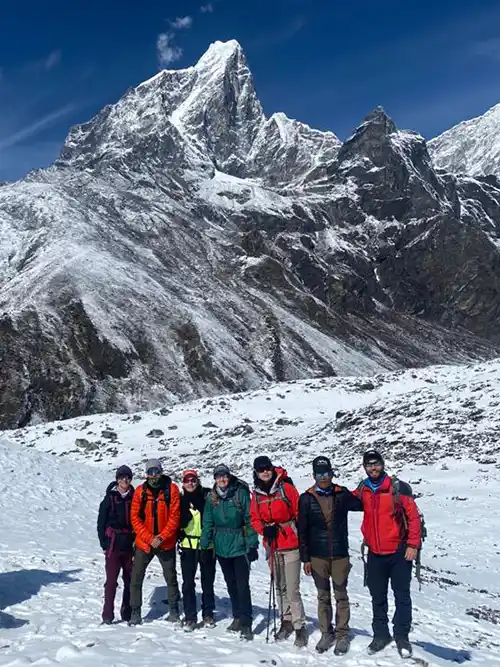
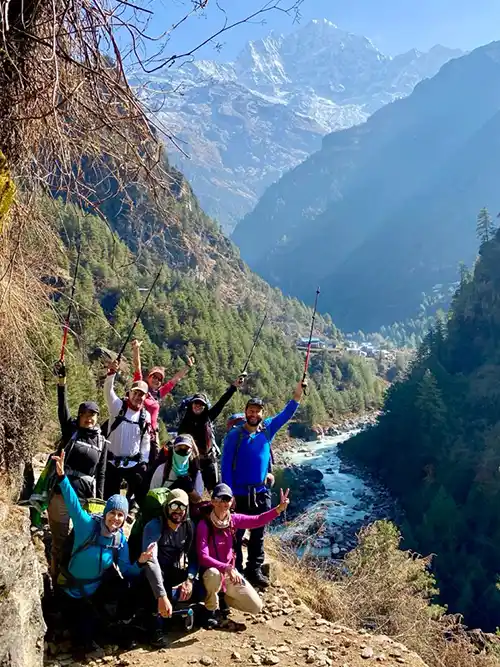
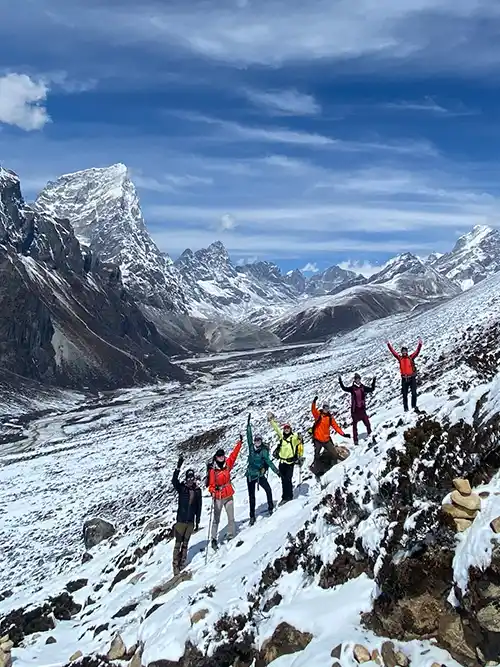
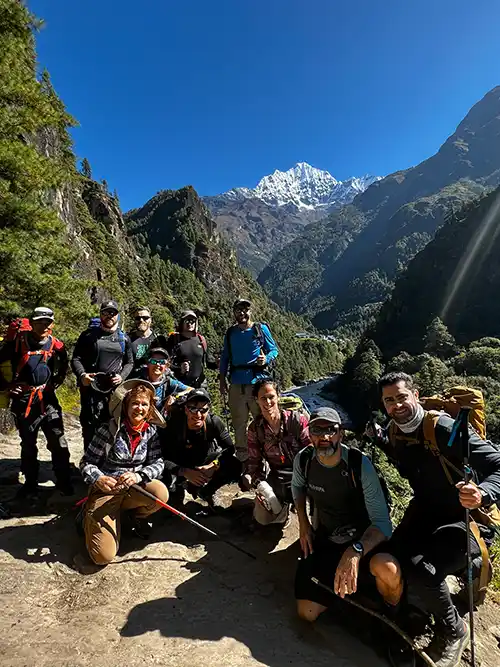
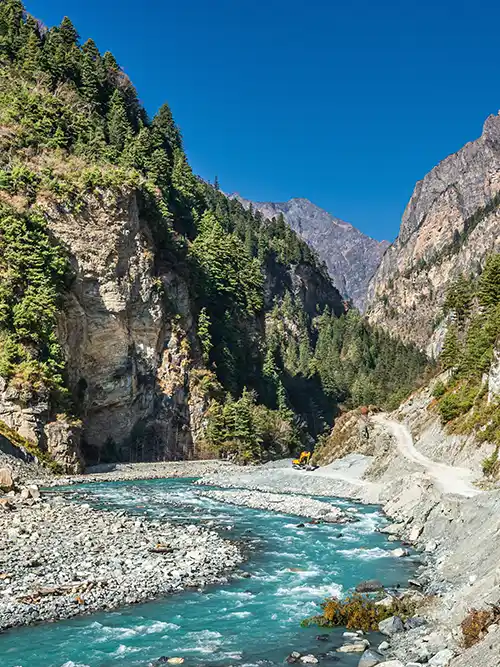
Located in the highest and most rugged mountain range on the planet, each step reveals breathtaking landscapes filled with lush forests, shimmering blue rivers, majestic snowy peaks, and vast glaciers.
This trip also gives us the chance to immerse ourselves in one of the world’s most fascinating cultures.
Each turn unveils new Sherpa villages, where welcoming, smiling people living in simplicity greet us like family, and generously share what they have, showing us the way of the mountains.
Discover the itinerary of this journey and join us on this amazing adventure!
Nepal
17 days
Hard
Day 1 – Arrival in Kathmandu
Upon arrival at Tribhuvan International Airport (TIA), you will be warmly received and transferred to your hotel. After check-in, we will hold a meeting to discuss trip details and daily activities. You’ll have the rest of the evening free to relax.
Day 2 – Kathmandu Tour
After breakfast, you’ll have the opportunity to explore the vibrant streets of Kathmandu. If needed, our team can provide assistance to rent or purchase any additional desired trekking equipment.
Day 3 – Flight to Lukla (2840 m) / Trek to Phakding (2610 m)
We’ll fly to Lukla, the gateway to the Everest region. The trek begins heading north through the stunning Dudh Kosi valley, gradually descending to the village of Phakding, where we will stay overnight.
Day 4 – Phakding (2610 m) to Namche Bazaar (3440 m)
From Phakding we will trek to the Dudh Kosi river, crossing several hills and impressive suspension bridges. If the sky is clear, we will have our first glimpse of Mount Everest. The final ascent to Namche Bazaar, the “capital” of the Khumbu valley, will be steep. After arriving, you will have the rest of the day free to explore or relax at local cafes.
Day 5 – Acclimatization Day in Namche Bazaar (3440 m)
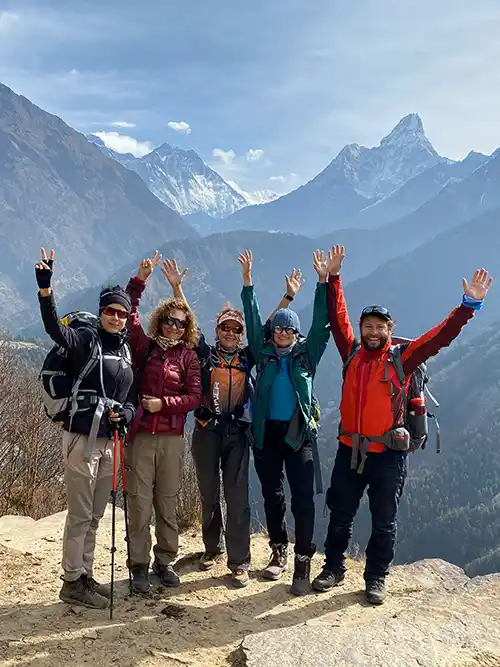
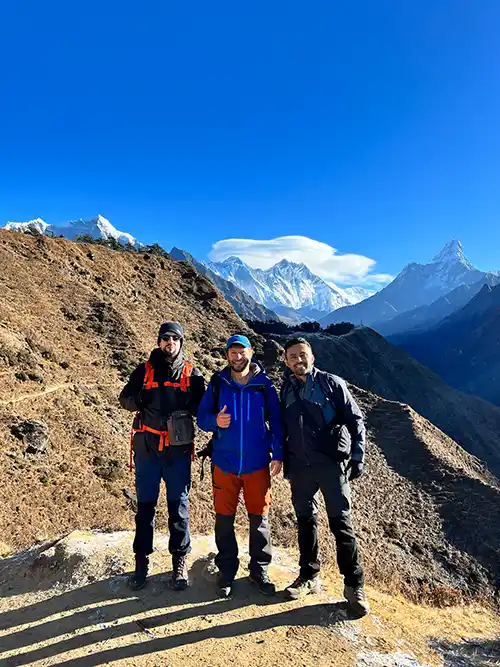
In the morning, we will hike to Syangboche and the Everest View Hotel, where we’ll enjoy a spectacular view of Mount Everest and other peaks, such as Lhotse, Ama Dablam, and Thamserku. We’ll return to Namche, and the afternoon will be yours to rest or to explore the town.
Day 6 – Namche Bazaar (3440 m) to Tengboche (3867 m)
The trail descends sharply to a bridge in Phunki Tenga, where we’ll stop for lunch. We’ll then continue on to Tengboche, where we’ll stay overnight.
Day 7 – Tengboche (3867 m) to Dingboche (4130 m)
We’ll pass through Pangboche, the highest permanent village in the region, and cross the Emja Khola river. After lunch in Shomare, we’ll continue through a nearly flat area before a gentle ascent to Dingboche.
Day 8 – Dingboche (4130 m)
The day is dedicated to resting and altitude acclimatization.
Day 9 – Dingboche (4130 m) to Lobuche (4930 m)
We will enter the perimeter of high mountains. We’ll hike to the village of Dughla and then climb to Lobuche, where we’ll be granted an impressive view of the massive Khumbu Glacier.
Day 10 – Lobuche (4930 m) to Gorak Shep (5180 m) and Kala Pattar (5555 m)
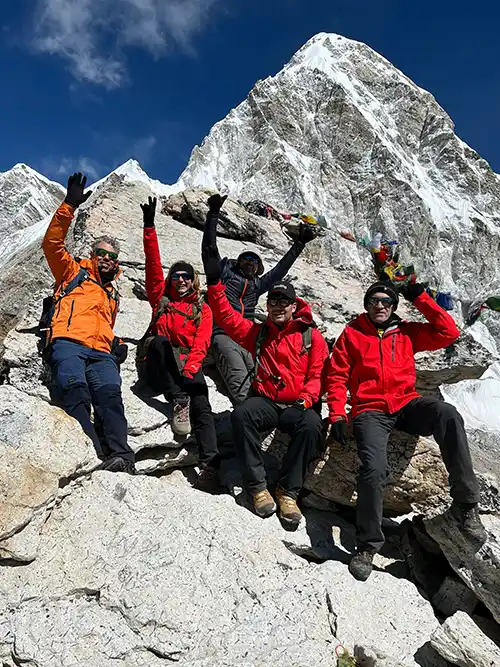
Heading north, we will follow the Khumbu Icefall to the town of Gorak Shep. We will then climb up the neighboring Kala Pattar where, from 5555 m, we will enjoy the gorgeous classic postcard view of Everest. After soaking in the view, we will return to Gorak Shep for the night.
Day 11 – Gorak Shep (5180 m)
This day is reserved as an extra day in the itinerary, in case any changes due to bad conditions occurred.
Day 12 – Gorak Shep (5180 m) to Everest Base Camp (5364 m) and back to Dingboche (4130 m)
We will follow the trail through the “ice forest” of the Khumbu Icefall to finally arrive at the famous Everest Base Camp. We will be able to spend time walking across the encampment from which the expeditions to scale Everest start, before making our way back to Gorak Shep for lunch. We will then start the return journey and make our way back down to Dingboche for the night.
Day 13 – Dingboche (4410 m) to Namche Bazaar (3440 m)
We will journey that day for 6 to 8-hours. We will stop for lunch in Tengboche, then make our way back to Namche.
Day 14 – Namche Bazaar (3440 m) to Lukla (2840 m)
On this last day of trekking, we will return to lower altitude mountains, and make our way once more through abundant greenery. At Chaunrikhara, there will be a final ascent before arriving at Lukla for the overnight stay.
Day 15 – Flight to Kathmandu
We’ll fly back from Lukla to Kathmandu, and be transferred to the hotel. The afternoon and evening will be free for you to enjoy, rest and celebrate at your leisure.
Day 16 – Free Day in Kathmandu Valley
This day is reserved as a safety buffer in case flight delays occur in Lukla due to bad weather conditions. If the flight did take place the previous day, you will have an extra day to further explore the streets and landmarks of Kathmandu.
Day 17 – Return Flight Home
You will be transferred to the airport with ample time for a smooth departure.
How do I know if I’m physically fit to trek to Everest Base Camp?
You don’t need to be a top athlete to trek to Everest Base Camp. However, it is recommended to start physical conditioning at least five months before the trip to make the hiking days more enjoyable, minimize muscle discomfort at the end of each day, and reduce the risk of injuries. Training should focus on cardiovascular fitness, which can be improved with aerobic activities such as swimming, running, or cycling.
What is the technical difficulty of the trek?
There are no technical difficulties on the route. The hikes vary from 7 to 12 km per day on relatively easy terrain. The route consists of ascents and descents, with some longer climbs, though none excessively steep. For some, the altitude may be the main challenge. Our itinerary is however planned to ensure gradual and natural processes of acclimatization. We will also emphasize the importance of drinking plenty of water throughout the trek, which is vital for adapting the body to high-altitude areas.
Will we encounter extreme cold?
Temperatures in Nepal during the ideal trekking seasons range from 25ºC to 10ºC in Kathmandu. As we gain altitude, temperatures drop. Closer to base camp, nighttime temperatures can reach -10ºC. The itinerary is planned so that we reach the lodges in the afternoon, minimizing exposure to intense cold. The equipment list provides guidance on what to bring for adequate weather protection.
What will the logistics of our transfers be like?
You will be welcomed at Kathmandu airport and a vehicle will take you to your hotel. In Kathmandu, the area is safe to explore on foot. To start the trek, a vehicle will take us to the domestic airport for the flight to Lukla. The return process will be the same, with transfers organized to the hotel in Kathmandu and to the international airport.
What type of accommodations will we stay in?
In Kathmandu, accommodations are provided at a 4-star hotel, generally the Marriott. During the trek, we will be in simple yet comfortable lodges, where three meals per day are included. Rooms are shared, with communal bathrooms, and there is no central heating, so you need to bring a warm sleeping bag. The common areas of the lodges are equipped with heaters and provide a more comfortable dining experience.
Can I choose to have a private room with a bathroom?
While the lodges do not offer en-suite options, they maintain clean and organized common areas. If you prefer a private room, it can be organised for an additional cost.
Can I leave some of my luggage in Kathmandu?
Yes, the hotel in Kathmandu provides secure storage for luggage that will not be used on the trek. You can retrieve your belongings upon your return from base camp.
Is there a menu for those with dietary restrictions?
Dal bhat, Nepal’s typical dish of lentils and rice, will be available, along with menu options such as pasta, soups, and both red and chicken meats. Please let us know in advance if you have any dietary restrictions or allergies so we can accommodate your needs as best as possible.
How does the acclimatization process work?
Our itinerary includes additional stops in Namche and Dingboche to allow for gradual acclimatization, minimizing the impact of high altitude. Staying well-hydrated is essential, both before and during the trek begins, to help your body adapt effectively.
Is there a local team to assist us?
Yes, in addition to organizer Moeses Fiamoncini, you will have a local guide, one assistant guide for every three trekkers, and one porter for every two trekkers, who will accompany you throughout the journey.
How much weight will I carry during the trek?
You’ll carry a small backpack (45-65 liters) weighing up to 5 kg, which should contain items such as water, sunscreen, a windbreaker, rain cover, gloves, fleece, and snacks. Your duffle bag (up to 15 kg) will be transported by porters to the next lodge each morning.
Are there facilities to shower every day?
Most lodges offer hot showers (gas-heated) for a fee of $4 to $6, except on the last two days in Lobuche and Gorak Shep. Due to the cold temperatures in these villages, we recommend using wet wipes for personal hygiene.
Will there be electricity? How can I charge my phone and camera?
Electricity is available throughout the route, though charging electronics may cost $3 to $8. We recommend bringing two power banks.
Does Nepal require a visa?
Yes, the visa is required and can be obtained at Kathmandu airport. Upon arrival, you will need to fill out a form, pay a $50 fee, and collect your visa at designated counters in the airport.
Where can I buy equipment in Nepal?
On arrival day, we will conduct an equipment checklist. If you need any additional gear, it can be obtained in Kathmandu’s shops. We can assist you with your rentals or purchases.
What documents are required for entry into Nepal?
How can I communicate with my family during the trip?
An internet card can be purchased for around $20. Lodges typically offer Wi-Fi, and there is the option of purchasing a local SIM card (NCell) near the hotel in Kathmandu.
Which airlines should I look for round-trip flights?
Please contact us so we can best counsel you on airlines based on your country of arrival if you need any assistance booking your flight.
How much money should I bring for personal expenses?
We suggest bringing around $600 to cover expenses such as meals and drinks in Kathmandu, tips, extra tours, and souvenirs. Additionally, you should carry an international-use credit/debit card, and we suggest bringing cash in US dollars, which can be exchanged for Nepali rupees at currency exchanges. ATMs are available in Lukla and Namche Bazaar.