
K2, towering at 8,611 meters, is the second-highest peak in the world and the tallest in Pakistan.
Reaching its base camp requires several days of trekking across the Baltoro Glacier, one of the longest glaciers outside the polar regions.
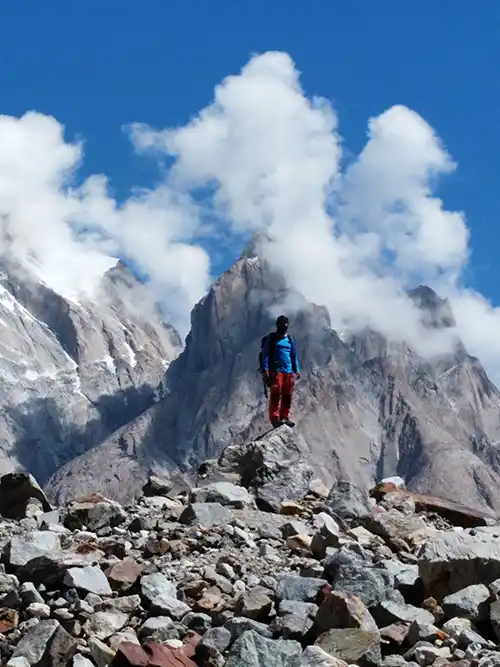
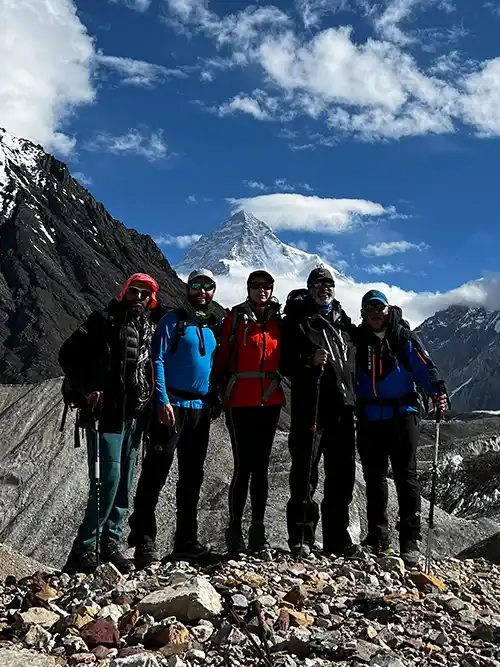
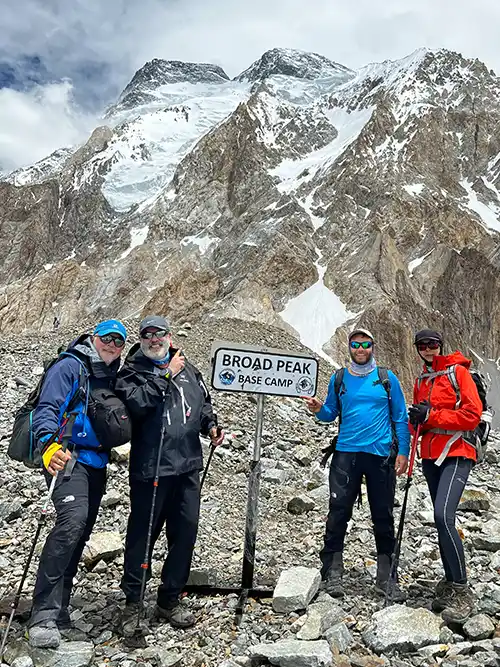
This 10-day journey takes you among some of the highest mountains in the world, including well-known peaks over 8,000 meters, such as Broad Peak, Nanga Parbat, G1, and G2, as well as numerous others towering over 7,000 meters.
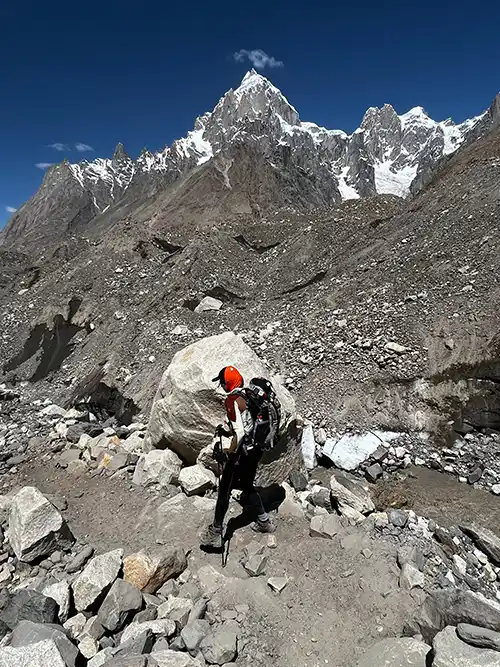
This journey is a rare opportunity to feel as if you’ve stepped onto another planet.
This rugged trek involves long daily hikes, offering unique and spectacular views that can only be accessed by those willing to step outside their comfort zone.
Pakistan
21 days
Hard
Day 1 – Arrival in Islamabad
Upon arrival at Islamabad International Airport (ISB), you will be greeted and transferred to the hotel.
Day 2 – Flight to Skardu
After breakfast, you will be transferred to the local airport for the flight to Skardu.
Day 3 – Extra day in Skardu in case of bad weather
An extra day is kept as a safety buffer in case the flight cannot be made the previous day. If the flight has been successful, the day will be put to profit to explore Skardu.
Day 4 – Skardu to Askole (2600m)
A 4×4 vehicle will take you from Skardu to Askole. This long journey covers a distance of 100 kilometers, but poor road conditions can lengthen the trip to over 8 hours.
Day 5 – Trek from Askole to Jhola (3185m)
The trekking officially begins! This day will comprise approximately 6 hours of walking, as we begin to enter what feels like an otherworldly landscape.
Day 6 – Trek from Jhola to Paiyu (3383m)
After breakfast, the trek continues to the next camp, which should take approximately 8 hours.
Day 7 – Rest day in Paiyu (3383m)
Reaching the 3,000 meters mark, an extra night is spent at the same altitude to better acclimatize.
Day 8 – Trek from Paiyu to Urdukas (4130m)
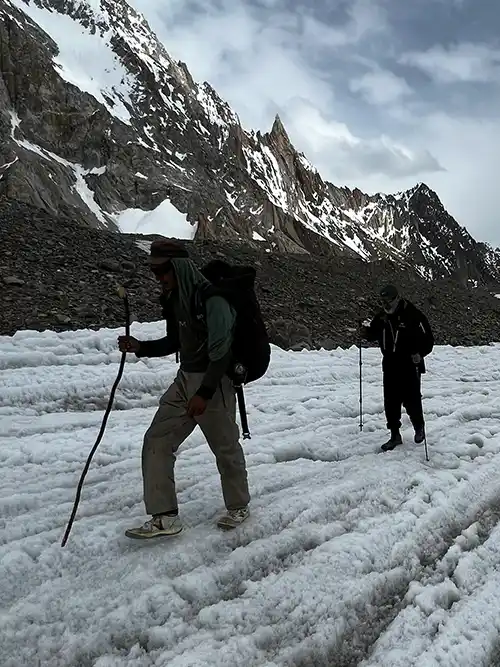
The trek reaches the Baltoro Glacier and the climb becomes more intense. There may be some challenging sections to cross. The day may exceed the 8 hours planned.
Day 9 – Trek from Urdukas to Goro II (4250m)
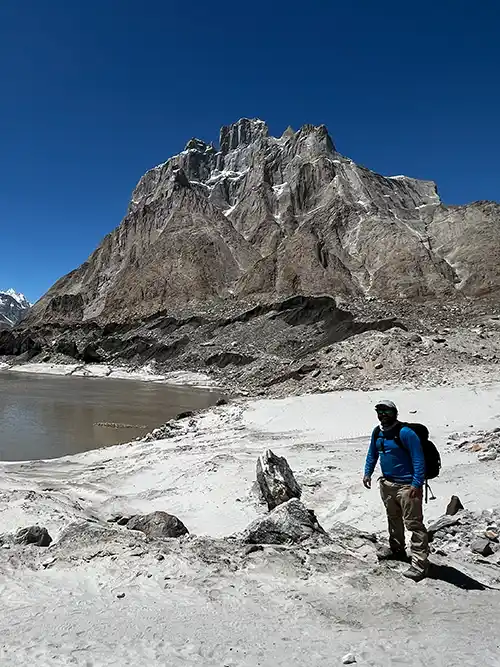
The Baltoro Glacier takes shape, revealing frozen lakes, icefalls, and other impressive frozen formations. A total of 6 hours of trekking is expected.
Day 10 – Trek from Goro II to Concordia (4690m)
The climbs and descents continue. The day’s section should be completed in approximately 6 hours, as we approach some of the areas with the most incredible landscapes of our entire adventure.
Day 11 – Trek from Concordia to K2 Basecamp (5150m)
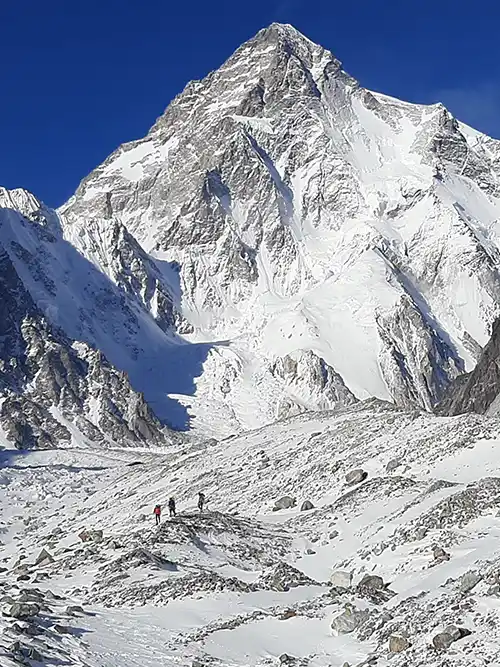
We reach the base camp of the mighty K2. Although its altitude is lower than Everest, reaching the mountain’s summit involves a highly technical and challenging climb which few dare to venture. We will enjoy the stunning beauty of the area and meet mountaineers preparing for their ascent.
Day 12 – K2 Basecamp to Concordia (4690m)
Our return is leisurely, so we can once again soak in the beauty of the landscapes. This is another great opportunity for photos on our trek back to Concordia camp.
Day 13 – Trek from Concordia to Goro II (4250m)
Although our return also involves both climbs and descents, the steeper descents may affect our trekking time.
Day 14 – Trek from Goro II to Khuburtze (3788m)
Up to 8 hours of trekking are expected.
Day 15 – Trek from Khuburtze to Mundung (2950m)
On our penultimate trekking day, we will have approximately 8 hours of walking.
Day 16 – Trek from Mundung to Askole (2600m)
Our last day of trekking and camping will involve approximately 6 hours of walking.
Day 17 – Journey from Askole to Skardu
A 4×4 journey back to Skardu. Remember, it’s approximately 8 hours of travel, but the reward will be a wonderful bath and a good night’s sleep at the hotel.
Day 18 – Rest day in Skardu
A well-deserved rest day in Skardu, celebrating your achievements.
Day 19 – Extra day in Skardu in case of bad weather
Extra day planned in Skardu in case of flight cancellations due to bad weather. If the flight does occur, the day will be spent resting and sightseeing in Islamabad.
Day 20 – Flight from Skardu to Islamabad and transfer to hotel
You will fly from Skardu to Islamabad and then be transferred to your hotel.
Day 21 – Return flight
Conclude your journey with your return flight to your home country.
How do I know if I am physically fit to do the K2 Base Camp trek?
You don’t need to be a top athlete to undertake the K2 Base Camp trek. However, it is recommended to start physical conditioning at least five months before the trip to make the hiking days more enjoyable, minimize muscle discomfort at the end of each day, and reduce the risk of injuries. Training should focus on cardiovascular fitness, which can be improved with aerobic activities such as swimming, running, or cycling.
What is the technical difficulty of the trek?
There is no technical difficulty, but the K2 Base Camp trek is not for beginners. The trek consists of 12 days of long hikes, averaging around 8 hours per day. The route features a continuous series of long ascents and descents. Beyond the physical challenge, participants should be prepared for a lack of modern comforts, such as spending days without a shower (although wet wipes are very effective for personal hygiene), and being completely disconnected, as there is no Wi-Fi signal during the trek. An adventurous spirit is needed to explore such a beautiful yet remote place. The weather can also be unstable in mountainous areas, with possible snowfall or even hail. For this type of adventure, it’s essential to be mentally prepared for the unexpected. For some, the main difficulty may be the altitude; however, the itinerary is designed to allow for good acclimatization. We will also emphasize the importance of drinking plenty of water throughout the trek, which is vital for adapting the body to high-altitude areas.
Will we face a lot of cold?
As we change altitude during the trek, the temperature tends to fluctuate. The coldest days will be those near the base camp, where nighttime temperatures can drop below -5ºC.
What will the logistics be like during our movements?
All transportation will be done by van, which will pick up the group at the airport and take them to the hotel, as well as for any necessary movements during the trip.
What will the hotels we stay in be like?
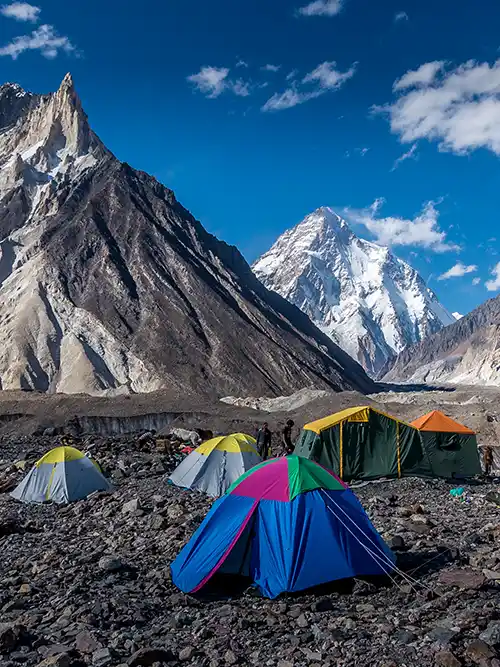
Our nights in Islamabad and Skardu will be in 3-star hotels that include breakfast. During the trek, we will camp in two-person tents, with meals included and served in a dining tent.
Can I choose to have a single room in the hotels and a single tent?
If this is your preference, please contact us so we can provide a quote and confirm the additional cost.
Can I leave part of my luggage in Skardu?
Yes. Any luggage not needed during the trek can be safely stored at the hotel in Skardu, where we will also stay before the return flight home.
Is there a menu for those with dietary restrictions?
If you have any dietary restrictions or allergies, please contact us to let us know in advance so we can accommodate your needs.
How does the acclimatization process work?
The K2 Base Camp trek allows for gradual altitude gain, which is essential for proper acclimatization. It is also very important to drink plenty of water a few days before starting the trek and throughout the journey, as our bodies rely on hydration to adjust to higher altitudes.
Is there a local team to assist us?
Yes, in addition to the expedition organizer, Moeses Fiamoncini, we will have a local guide, as well as an assistant guide for every three people, and a porter for every two people. They will accompany us throughout the journey.
How much weight will I carry during the trek?
You will carry a small backpack (45 to 65 liters) with a maximum weight of 5kg. This bag should contain 2 liters of water, sunscreen and lip balm, a windbreaker (anorak), rain cover, gloves, a fleece, and your preferred snacks. Your duffle bag (up to a maximum of 15kg) will be carried by the porters each morning to the next camp, where it will be available at the end of the day.
Is there a structure for taking a shower?
There are no shower facilities available, but wet wipes are usually effective for personal hygiene.
Will we have electricity? How do I charge phones and cameras?
There will be no electricity during the trek. Each person should bring their own power bank(s) to recharge their electronic devices.
Does Pakistan require a visa?
Yes, you must apply for a visa to enter Pakistan. The application can be made online through this link: http://islamabade.itamaraty.gov.br/pt-br/tipos_de_visto.xml
What documents are required to enter Pakistan?
How much money should I bring for my personal expenses?
We recommend budgeting an average of $600 per person for expenses on drinks, meals in Islamabad and Skardu, tips for porters, extra tourist excursions, and souvenirs. It’s advisable to bring a credit/ debit card enabled for international use, as well as cash in US dollars.