
Ecuador is part of the exclusive list of the world’s 16 most biodiverse countries. Among its countless natural wonders, the magnificent Avenue of the Volcanoes stands out as an impressive geological spectacle.
With a land area comparable to the state of São Paulo, Ecuador is home to 84 volcanoes, and our mission is to explore some of them. As if its breathtaking landscapes weren’t enough, this fertile country also boasts exceptional cuisine, capable of surprising even the most discerning palates.
Embark on this journey to discover unique scenery and experience the warm, welcoming culture of the Ecuadorian people. Explore the itinerary and venture with us!
Equador
12-15 days
Medium
Day 1 – Arrival and transfer from Quito to the hotel. Overnight in Machachi (3,000m)
Meet and greet at the airport, then a one-hour trip to our base city, Machachi. Free day to explore. Machachi is a simple, safe, and well-equipped town, with many restaurants offering diverse menus. It’s surrounded by Ecuador’s most famous volcanoes.
Day 2 – Machachi – Ascent to Pasochoa (4,200m). Overnight in Machachi.
After breakfast, we’ll head to the base of Pasochoa volcano to begin our trek, getting our first taste of this unique region’s beauty.
Day 3 – Trekking in Antisana National Park. Overnight in Machachi.
Antisana National Park is a renowned ecological reserve known for its stunning landscapes and wildlife. During our trek, we may spot the famous Andean condors.
Day 4 – Machachi – Ascent to Corazón volcano (4,700m). Overnight in Machachi.
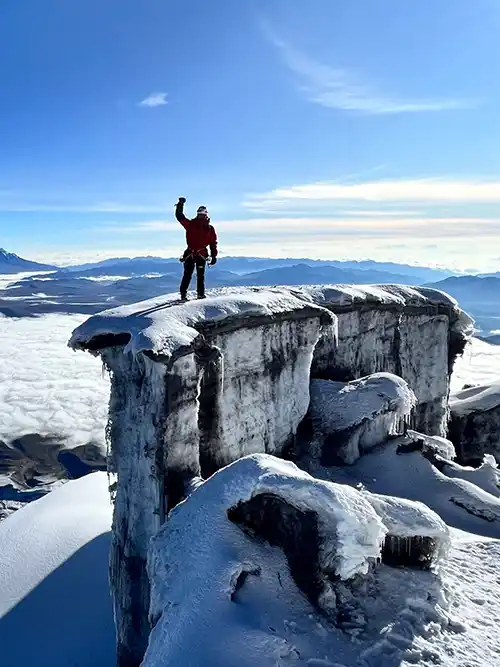
Corazón volcano will be our first mountain requiring scrambling, where we’ll be roped up with harnesses and helmets. The view of the rock formations near the summit is breathtaking.
Day 5 – Machachi – Quilotoa Lagoon (3,914m). Overnight in Machachi.
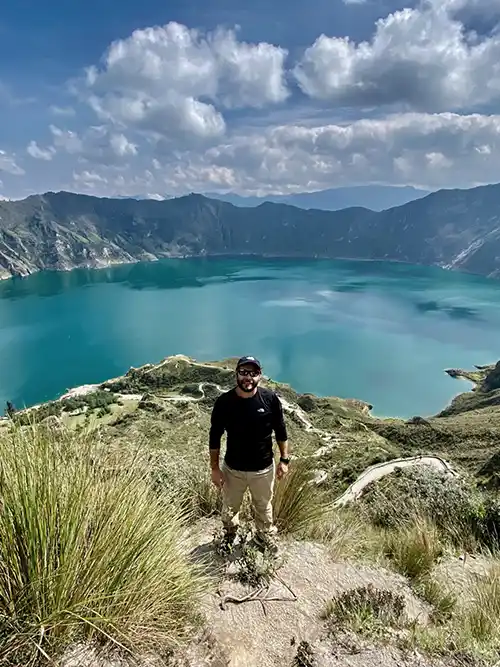
We’ll leave early to visit the magnificent Quilotoa Lagoon, a blue lake inside a volcano crater nearly 4,000 meters high. From the crater, it’s possible to descend to the lagoon, where the bravest may even swim.
Day 6 – Machachi – Refuge in Ilinizas National Reserve (4,750m).
Illiniza Norte is part of Ilinizas National Park, which has two mountains: Illiniza Norte and Illiniza Sur. We’ll start our hike from the park gates and reach Nuevos Horizontes Refuge by early afternoon.
Day 7 – Summit of Illiniza Norte (5,126m). Overnight in Machachi.
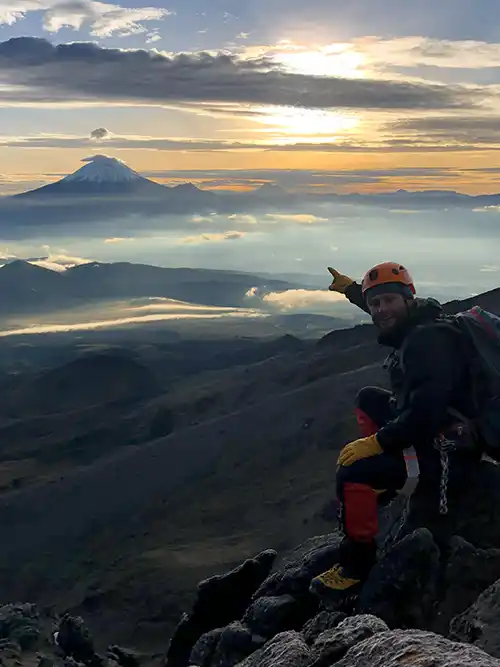
We’ll leave the refuge around 3 am to reach the summit by sunrise. The view is awe-inspiring, offering the first glimpse of nearby volcanic peaks, including Cotopaxi and Chimborazo.
Day 8 – Visit to La Mitad del Mundo and Historic Center of Quito. Overnight in Machachi.
We’ll visit the Mitad del Mundo monument, where you can take a photo with one foot in each hemisphere. The 30-meter tower also houses an ethnographic museum. Then, we’ll explore Quito’s historic center.
Day 9 – Machachi – Cotopaxi National Park Refuge (4,864m).
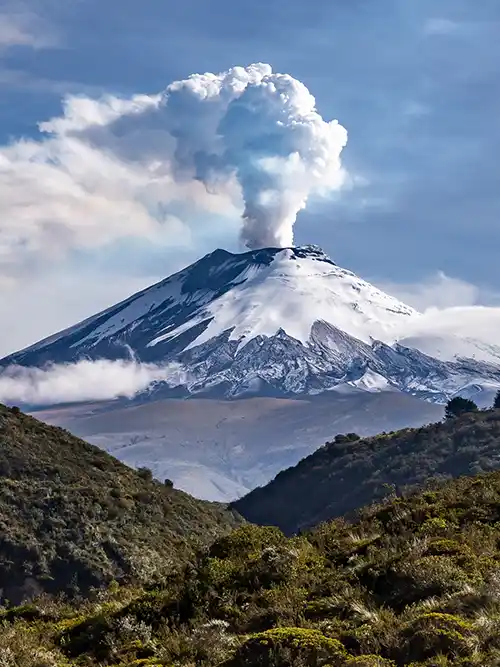
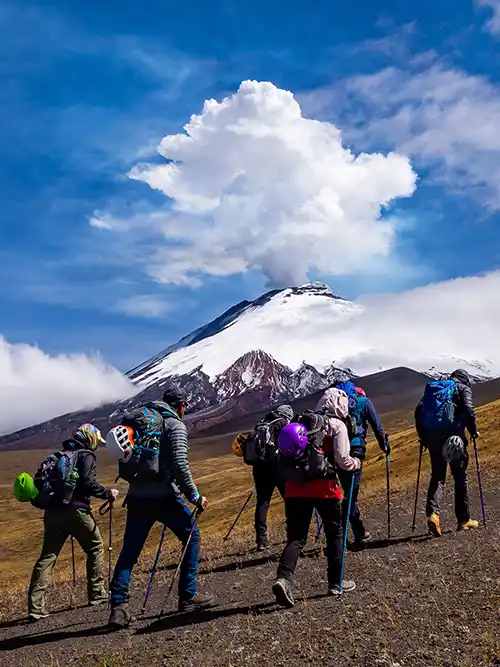
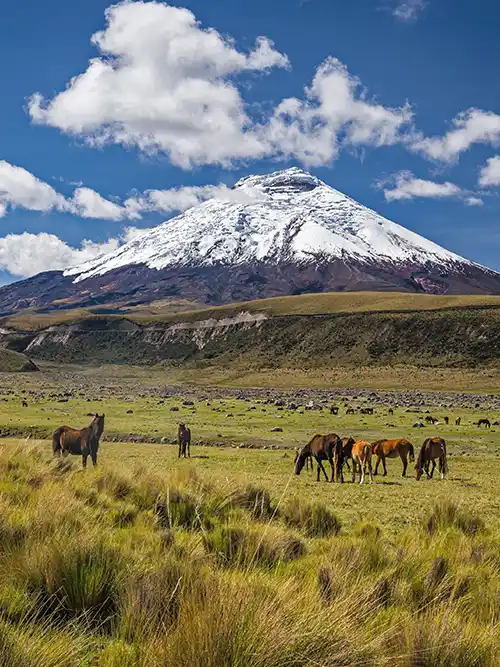
Cotopaxi is the world’s highest active volcano. After lunch, we’ll head up to the José Ribas Refuge, a cozy place with a small bouldering wall. We’ll rest here before the summit attempt.
Day 10 – Cotopaxi Refuge – Summit of Cotopaxi (5,897m) – Overnight in Machachi.
We’ll leave the refuge around midnight, aiming to reach the summit by early morning. Cotopaxi’s summit is non-technical but requires determination, as it involves steep snowy climbs. After the summit, we’ll return to Machachi.
Day 11 – Rest day – Overnight in Machachi.
Well-deserved rest day in Machachi before returning home.
Day 12 – Machachi – Quito (return flight).
Transfer to Quito airport for the flight home.
Day 12 – Chimborazo Volcano Extension: Machachi – Hermanos Carrel Refuge (4,800m), hike to Camp 1 (5,200m).
(Itinerary subject to weather conditions.) After breakfast, we’ll head to Chimborazo National Reserve, a beautiful area where wild vicuñas graze freely. We’ll reach Camp 1, where we’ll prepare for the ascent.
Day 13: Camp 1 (5,200m) – Chimborazo Summit (6,263m) – Return to Machachi.
Starting at 11 pm, we’ll begin the 9-hour ascent. After taking in the views, we’ll descend, which can take 4-5 hours. We’ll then return to Machachi.
Day 14: Machachi / Quito (return flight).
Transfer to Quito airport for the flight home.
How do I know if I am physically fit for this adventure in Ecuador’s volcanoes?
You don’t need to be a top athlete to start in the world of mountaineering, but good physical conditioning is essential. Ideally, regular physical preparation should begin at least three months before the trip, to avoid muscle discomfort at the end of each day’s hike and reduce the chances of injury. Training should focus on cardiovascular fitness, which can be improved through aerobic activities such as swimming, running, or cycling.
What is the technical difficulty of climbing Ecuador’s volcanoes?
During the first days, the climbs have no major difficulties and are carried out almost without technical equipment. For some, altitude may be the main challenge; however, the itinerary is designed for gradual acclimatization. In the second part of the trip, Illiniza and Cotopaxi mountains present low technical difficulty, moderate altitude, and require a moderate physical intensity. Chimborazo, however, demands more physical effort due to its higher altitude.
Will we face a lot of cold?
Temperatures in this region of Ecuador range between 10 and 20 degrees Celsius. As we ascend towards the summits, temperatures gradually decrease and can reach -5 degrees on Cotopaxi and Chimborazo.
What will the logistics of our transfers be?
Upon arrival at Quito airport, you will be met by a vehicle that will take you to the lodge in Machachi. If you wish to explore the nearby city, the area is generally safe. Machachi is a quiet town with a wide variety of restaurants. A van will handle all our round-trip transfers to the national parks where the mountains are located, and from where we will start our hikes. The return follows the same process, with a transfer to the international airport for the flight back to your country.
What will the accommodations be like? And the meals?
We will stay in Machachi at a lodge with double and triple rooms. The lodge has an excellent breakfast and a social area with a fireplace. Breakfast and a packed lunch (for mountain days) are included. Dinner will be on your own in Machachi, as well as lunch on free days. The town has a variety of restaurants. On Illiniza, Cotopaxi, and Chimborazo mountains, we will stay overnight in mountain refuges, with dinner and breakfast included.
Can I choose a single room?
Yes, a single room option is available. Please contact us for the additional cost if you are interested.
Can I leave my luggage at the lodge in Machachi on the nights we stay in the mountain refuges?
Yes. There’s no need to check out of the lodge on the days we will be sleeping in the mountain refuges. All our belongings will remain in our rooms in Machachi.
Is there a menu for those with dietary restrictions?
Mountain refuges offer meal options for those with allergies or intolerances at dinner, but these must be informed in advance. For breakfast at the Machachi lodge and at the refuges, depending on the intolerance, you may need to bring your own food. For example, we found it challenging to locate gluten-free products in Machachi’s supermarkets.
How does the acclimatization process work?
Our itinerary is designed so that the acclimatization process occurs as naturally as possible. Exposure to altitude is done gradually to minimize the impact on your body. Drinking plenty of water in the days leading up to the trip, and throughout each day of the trip, is essential. Our bodies use water to support the changes necessary for altitude adaptation.
Is there a local team to assist us?
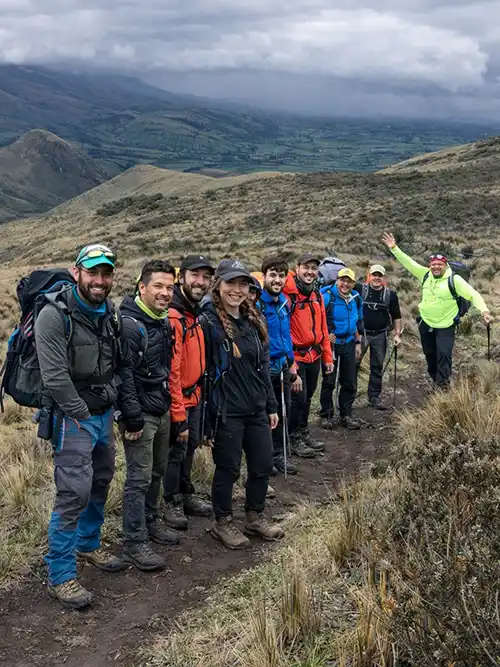
Yes, in addition to the expedition organizer, Moeses Fiamoncini, we work with qualified local guides. They will accompany us throughout the journey.
How much weight will I carry during the mountain climbs?
You will carry a small backpack (capacity between 45 and 65 liters) with a maximum weight of 5 kg. This bag will contain: 2 liters of water, sunscreen and lip balm, a windbreaker (anorak), rain poncho, gloves, a fleece, and your preferred snacks.
Are there facilities for bathing in the mountain refuges?
Mountain refuges do not have showers, so we recommend bringing wet wipes for hygiene on these days.
Does Ecuador require a visa?
Ecuador does not require a visa; only an ID less than 10 years old or a valid passport with at least 3 months before expiration is needed.
What documents are required to enter Ecuador?
Which airlines should I check for flights?
We usually recommend purchasing flights through a travel agency, as it can expedite changes if necessary, such as in case of flight rescheduling.
How much money should I bring for personal expenses?
We recommend an average of $300 per person for expenses on drinks, meals in Machachi, tips for guides, and the PCR test required for returning to Brazil. We suggest bringing a credit/debit card enabled for international use, as well as cash in US dollars, as the country’s currency is the dollar